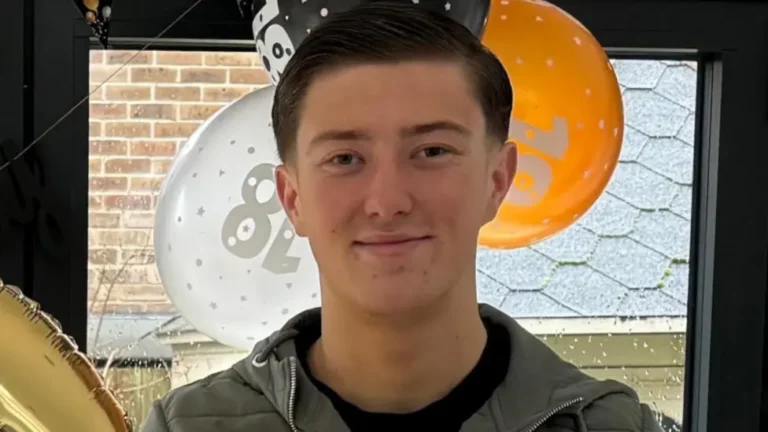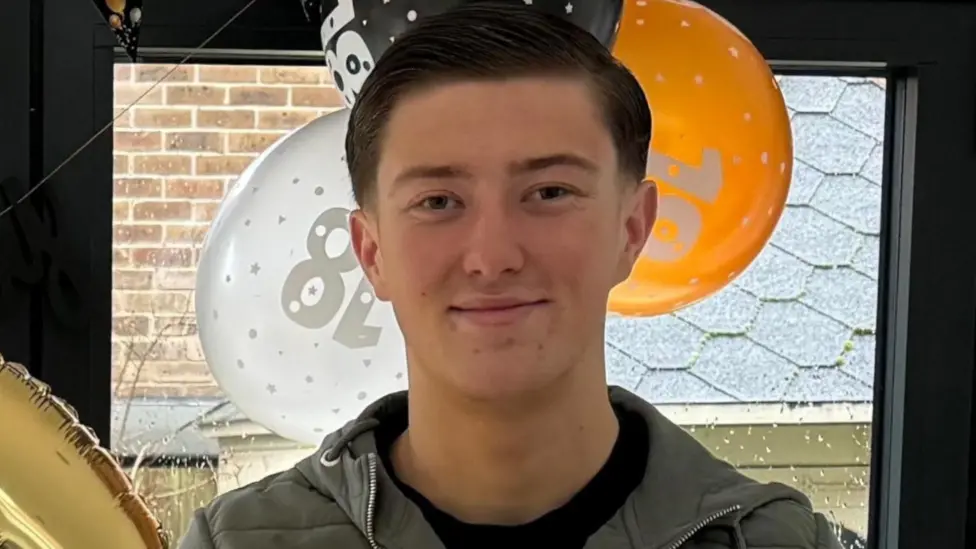
Photo Credit Hampshire and Isle of Wight Constabulary
The Story Beneath the Story
Henry Nowak should not be dead. All available evidence points to the atrocious conduct of the police being responsible for the fact that he did not survive the brutal stabbing he endured. This is what we must never forget: at its heart, this is the tragedy of a boy who should still be here, and a family completely opposed to the rabid, opportunistic pounce that has followed his passing.
We must also be entirely clear about who is speaking out. The vast majority of rightfully outraged people, both online and offline, are not fascists or Nazis—nor are they backing those agendas by demanding justice.
Fundamentally, this is the story of a needless death used by the far right to push fascism. It is a case that, while exposing deep institutional failure at its core, has ultimately served to reveal an extremely dark tendency building on our streets, and the slipping of a decades-held mask.
What Actually Happened That Night
And so, we must first examine what actually occurred on that night. The bodycam footage released on the day of sentencing is, by any rightful measure, damning. Henry Nowak is visible on the ground, telling officers he cannot breathe and explaining that he has been stabbed multiple times. That footage should be watched—and already has been by millions across the country. The policing failure it documents is real, and it is deadly serious. We say so without qualification.
But understanding what happened matters enormously. We do this not to excuse it, but to be precise about what it actually was. The distortions being built on top of this case—distortions that are currently leading to calls for mob violence online and violence on the streets—depend entirely on that precision being absent.
When the first officer arrived at the scene, Vickrum Digwa was there with his brother and another family member. They were upright, composed, and presented a coherent, consistent lie: that they had been attacked, that Digwa had acted in self-defence, and that Henry was the aggressor in a racial attack who had yelled slurs at them. Multiple people were telling the same story with apparent corroboration.
Henry, on the other hand, was muttering, slumped down against a wall, and barely audible. His wounds were not immediately visible on a dark night over dark clothing. The blood in his mouth could be, and apparently was, explained away by the account Digwa’s family was giving—that there had been a fight, and that injuries had occurred in the struggle. This is what the officer arrived to find.
Henry was muttering because he had been stabbed five times and was dying. The very fact of his dying made him less able to advocate for himself. That is the tragedy within the tragedy.
The officer did not know that. But the officer had a duty—a basic, elementary duty owed to every person at that scene, regardless of who was deemed the suspect and who the victim—to check and properly assess the physical condition of every person present. They had a duty to hear the man on the ground saying he had been stabbed. That duty was not fulfilled. Henry told the officer he had been stabbed. He told him repeatedly. He was not checked. He died.
That is the scandal, and it is a real one. We welcome the IOPC referral—Hampshire Police referred themselves—and we call for full transparency and genuine accountability for these inexcusable actions. The police are an institution we will criticize plainly and openly, and it is undeniably warranted here. What happened was an objective failure of institutional duty.
Everything that follows in this article is not a defence of that failure. It is a demand that the failure be understood correctly. What is being built on top of it is something far more dangerous than a fatally mishandled policing incident. In that incident, the officer did two things: he failed to check on Henry, and he believed that Henry was the aggressor. These two things are not the same, and that distinction matters for everything to come.
How a Policing Failure Became a Race Conspiracy
Armed with the facts of the case—facts fully backed by the courts and the released bodycam footage—we can now examine the exact conflations and lies the far right used to turn this tragedy into a riot.
The far-right narrative surrounding Henry’s death, though varying depending on the extremism of the organization parroting it, generally goes something like this: Henry was stabbed by a non-white perpetrator using a knife that “good British people would not be allowed to have.” The responding officer then uncritically believed the killer’s story due to the DEI indoctrination of our public servants. Therefore, they let Henry die and ignored his wounds, favoring a claim of racism over his mortal injuries. Some groups push this even further, claiming Digwa carried out the attack simply because Henry was white. As the leader of UKIP put it, Digwa’s views may be “representative of perhaps millions of non-whites across the world.” While these baseless claims require no formal debunking, they all stem from the same toxic premise: that Henry was ignored because he was white.
Separation of Failures
To understand why this is a lie, we must return to the two distinct failings of the responding officer:
- He incorrectly assessed Henry as the perpetrator of the crime.
- He ignored Henry’s wounds while arresting and detaining him.
Claims of “woke propaganda” and institutional indoctrination can only logically apply to the first point—how the accusation of a racially motivated crime was treated. While it is highly unlikely given the numerous other factors involved, it is not entirely impossible that police training on handling hate crime allegations influenced the officer’s initial belief. However, the overwhelming, primary explanation for why the officer found Digwa’s account more credible than Henry’s has nothing to do with race. Digwa was standing upright, speaking clearly, and had two family members providing consistent corroboration. Henry was barely audible because he had mortal wounds.
That is not a racial dynamic. That is the direct physical consequence of having been stabbed five times. Race, even if present as a background factor, was not the engine of what happened. The engine was a dying man trying to speak and not being heard. To place race at the centre of that dynamic is to erase the dying from the account of his own death.
A Failure of Procedure, not a Racial Conspiracy
This brings us to the second, entirely separate failure: the failure to assess Henry’s wounds, and this has absolutely nothing to do with race. The officer made an assessment of guilt that, although unlikely, could have been influenced by DEI or some sort of ethnic-based bias. That is where it ends; beyond that, it is about care and procedure. And this is where the real failing happens—the death itself.
At this point in the footage, the officer’s attention is fully on Henry. He is handcuffing him. This is where Henry repeatedly says he has been stabbed, and this is where the basic requirement to assess a detainee for injuries was ignored. This has absolutely nothing to do with anti-white bias, “two-tier policing,” or progressive training. This is a question of pure procedure—a procedure that was fatally failed.
This police force has been declared as have having an anti white bias or anti-white racism. But Hampshire police force is 5x more likely to stop and search black people than any others, above the still sickening national average of 3.7x. That is where the real systemic racism lies in policing, and by having to debunk the claims of anti-white racism before even reaching this point the struggle for a non-institutionally racist police force – something that should be by all means be a moderate demand – is set back decades.
And so, to claim that this specific failure of care was motivated by race is ludicrous. Unless the far-right plans to argue that a white British police officer deliberately chose to let a young man die simply because he was white—something that has no evidence or reason behind it—their narrative completely falls apart. This was a catastrophic failure of care, not an act of racial malice.
But by deliberately conflating these two separate actions into a single institutional conspiracy, the far right has built a narrative that cannot survive honest examination. And let’s look at the specific phrase that seems unavoidable in these moments: “two-tier policing.” This baseless theory claims that ethnic and religious minorities are treated much more leniently by the courts and the media, allowing them to escape justice. While the populist right media and open fascists have aggressively applied this label to Henry’s case, the reality of the situation completely refutes it. Far from ignoring the tragedy, every major media outlet has denounced it. The killer was rapidly arrested and sentenced to decades in jail, with active reviews underway to potentially extend the sentence. Furthermore, the Prime Minister has met with the family, the Home Secretary has addressed Parliament, and a massive policing review is already in motion. Keir Starmer publicly stated he felt sick watching the bodycam footage, and politicians across the spectrum are calling for a higher minimum term. Absolutely no one is defending what happened—not a single serious political voice.
Off goes the mask
That is the rhetoric and reality, so let us see where this has led us. The demonstration on the evening of 2 June began with genuine public grief. Two thousand people gathered outside Southampton Central Police Station. There was a minute’s silence. There were chants of “shame on you” directed at the police. The anger was real and, at that stage, the assembly was peaceful. It is important to say this, because conflating the entire crowd with the organised far right that moved to the front of it would be both dishonest and analytically wrong. There were ordinary people there, genuinely distressed about what had happened to Henry Nowak, who deserve to be distinguished from what those people’s grief was then used for.
Paul Golding of Britain First was present from the start. UKIP leader Nick Tenconi addressed the crowd, pledging mass deportations and the reinstatement of Christianity at the heart of government, claiming that Digwa’s mindset was “representative of perhaps millions of non-whites across the world.” Laurence Fox spoke. Then Tommy Robinson — who had earlier that day posted a video in an agitated state calling supporters to Southampton and announcing he would be there, his attendance no spontaneous act of solidarity — took the stage and called for Digwa’s family to be driven out of Southampton.
At that point the march moved toward the family home. And the character of the demonstration changed entirely. Masked figures moved to the front. Nazi salutes were thrown at the police line. White Power was chanted. This is confirmed not by social media clips alone but by Searchlight Magazine — one of the most authoritative publications on far-right activity in Britain — and by Byline Times. At the front of the line when police were attacked was Luke Jahn, Portsmouth Branch Organiser of the National Rebirth Party, who was later seen physically fighting officers. Bins were set alight and rolled toward police lines. Stones, chairs, bricks and wheelie bins were hurled at officers in riot gear. Hampshire Constabulary deployed its helicopter, mounted officers, and additional riot vans as disorder spread across multiple locations.
Hampshire Police confirmed the following morning: eleven officers and one police dog injured. Two arrests, with a few more expected to trickle in as perpetrators are identified.
That ratio is a problem. Eleven officers hurt, eleven hurt bad enough it’s reported that is. Two people arrested. The overwhelming majority of those who attacked police officers walked away from that street, and that suggests they were able to control a significant enough amount of the streets that they were essentially invulnerable. That is a dark sign. In the 2024 riots, 1,840 were ultimately arrested for 361 officer injuries. The impunity here is not incidental. It has direct implications for what those involved believe they can do next, and for how the situation develops in the coming days.
Throughout all of it, Henry’s face was on the banners, in the chants. His image was carried through the streets by people throwing bricks at police. His father had stood outside Southampton Crown Court the previous day and asked — explicitly — that his son’s death not be used to create division, hatred or tension. Tommy Robinson heard that and posted his call-out video anyway. The groups like UKIP and Restore Britain came anyway. They are not there for Henry Nowak. They are using Henry Nowak. His own family has said so.
The morning after, Nigel Farage stood up at Prime Minister’s Questions. MPs across the chamber immediately began calling out that he had incited the previous night’s violence and demanding he condemn it. He did not condemn it. He told the House the anger was “in danger of getting considerably worse.” The calls to condemn it grew louder around him. He ignored them and sat down.
A sitting MP, on the floor of the House of Commons, the morning after eleven police officers were injured at a protest his rhetoric had directly fuelled, refused to condemn the violence and instead predicted — or threatened, depending on how you view him— that it would escalate. Meanwhile, on the platform Farage uses as his primary amplification engine, Elon Musk — the world’s wealthiest man — offered to fund a private prosecution of the police officers involved in Nowak’s death. The international dimension of this ecosystem is not an abstraction.
This escalation has become a watershed moment for the political establishment, and for Nigel Farage specifically. For years, he has been seen as an edgy populist—right-wing and connected to a general surge of violence, but never directly linked to it, and always treated as operating within acceptable boundaries. This seems to be no longer the case. When Farage spoke in the Commons, he was utterly jeered from all sides. Articles are being written by respectable, centrist journalists like Ian Dunt, who explicitly blame him and declare him a threat to national security in their headlines. The Conservatives, an ideological neighbour, have not been silent either; their voices have joined those of every other party calling for him to denounce the violence he now so subtly influences. Because when he refuses to denounce violence, calls for rage before riots break out, and ideologically aligns himself with fascist organizations, he is rightfully no longer seen as a simple populist toeing the line. He has crossed it irrevocably.
What the PMQs scene represents is something significant. It is the political establishment realising that what Farage is doing is not politics as usual, not robust opposition, and not even inflammatory yet ultimately legitimate commentary that he never links to any violence. It is the parliamentary wing of a movement that threw Nazi salutes at a police line the night before, and the rest of Parliament—including people who agree with him on most things—is now saying so out loud. That is a historic moment, and it should be recorded as one.
No-one is safe
For decades, the British far right — from Tommy Robinson at the centre of the ecosystem outward through the networks to parliamentary figures like those now prominent in Reform — have maintained a consistent rhetorical position: they are not against immigrants as such, not against all minority communities, only against specific threats. And to demonstrate this, they have held up the Sikh community as their proof of non-racism. The good immigrants. The integrated ones. The people who hand out food at langar, who served in the World Wars, who are woven into British civic and community life. Sikh community members have been touted, consistently and deliberately, as the acceptable face of diversity that even the right could endorse.
Watch how quickly that investment was abandoned.
Within days of Henry Nowak’s killing becoming a political flashpoint, Robert Jenrick and others within Reform were calling for a ban on the Kirpan — the ceremonial knife carried by observant Sikhs as an article of faith. The Kirpan has essentially no history of violence in this country. It is a religious item, not a weapon in any practical sense. And the blade used to kill Henry Nowak was already illegal under existing law, it was an 8 inch blade. A Kirpan ban would not have saved him. pushing for one knows this. The facts are not obscure or disputed. They do not matter, because the Kirpan is not the point. The Sikh community is the point.
The speed of the pivot is the evidence. Decades of rhetorical investment — the good immigrants, the proof that this isn’t about race — abandoned the moment a political opportunity appeared. The mask did not slip. It was removed, calmly and deliberately, in front of everyone, because the people wearing it calculated that the moment required it, that the community and ideology of the supporters they could tap into was worth crossing this line and that this moment made it worth it.
This is what ethno-nationalism looks like when you watch it operate without the usual pretence. The “good immigrant” framing was never a genuine position or moral standard. It was a device — useful for maintaining a veneer of reasonableness, useful for deflecting accusations of racism, for as long as no Sikh man had killed a white boy on a street that would become nationally significant. The moment the device was no longer useful, it was discarded. The community it was built around was discarded with it.
And if this is what they do to the community they spent decades holding up as exemplary — if decades of rhetorical investment can be undone in days — the question answers itself. There is no community that is safe under this logic. There is no group whose standing is secure. There is no minority whose acceptance cannot be revoked when the moment demands, and whose acceptance won’t be revoked.
Two failures, both condemned.
We condemn the murder of Henry Nowak. We condemn the institutional policing failure that contributed to his death, addressing it forensically and without hedging because honesty requires it. We do both out of a commitment to liberty and justice for all people. It is precisely that commitment to liberty for every person that requires us to also name and confront what is being built here.
What is being built here is separate from justice for Henry Nowak. His father has stated that justice for Henry means safer streets, stronger knife laws, no division, and no hatred. In contrast, what turned up in his name in Southampton involved Nazi salutes at a police line, the National Rebirth Party fighting officers, and Tommy Robinson calling for a family to be driven from their home. What arrived at Westminster the following morning was a parliamentary leader refusing, under direct pressure from the entire Commons, to condemn violence against police officers.
Consider the escalation, because it reveals the true nature of this movement. It was not long ago that the defining target was the criminal illegal immigrant—a framing that many on the centre-left accepted. This expanded to all asylum seekers, then to legal immigrants, then to Muslims, and now to Sikhs. The community this same movement spent decades holding up as proof of their own moderation was abandoned and attacked as soon as political convenience demanded it. The concept of the “good immigrant” was a device rather than a principle, and the proof of that has now arrived.
The logic does not stop. There is no community that is permanently safe under it, and no group whose standing cannot be revoked when the moment demands. The targeting began with groups whose persecution was easy to dismiss, moved to groups it was fashionable to critique, and has now reached groups everyone assumed were safe. This is a description of what is visibly and documentably happening on British streets and in the British parliament right now.
This is fascism. It is different from the classical fascism of the twentieth century, which relied on uniforms and unambiguous iconography that allowed it to be spotted and dismissed at a distance. This is more insidious and adaptive. It is cloaked in the language of patriotism, law and order, and protecting communities. It presents its current target as the final one while concealing its next escalation, working toward an ultimate goal it does not yet name openly. The Nazi salutes in Southampton were a disclosure of this reality.
We fight in the name of liberty for all people, regardless of ethnicity, religion, or origin. This is a political commitment with consequences. One of those consequences is that we have a duty to look clearly at what is being constructed under the cover of grief for a boy whose father asked explicitly that his name not be used this way, and to name it clearly.
Henry Nowak deserved better than to be failed by the officers whose duty was to protect him. He deserves better than to have his face carried through the streets by people attacking those same officers. His family has asked for justice instead of division. Genuine justice—for Henry, for future victims of knife crime, and for every community threatened by the movement using his name—requires that we be honest about both failures. We must address the failure of a police officer who did not check on a dying boy, alongside the failure of a political culture that has allowed a fascist movement to grow, organise, and operate openly with parliamentary cover on our streets.
We see both, we name both, and we confront both.
Want to get the latest from us? Sign up now!